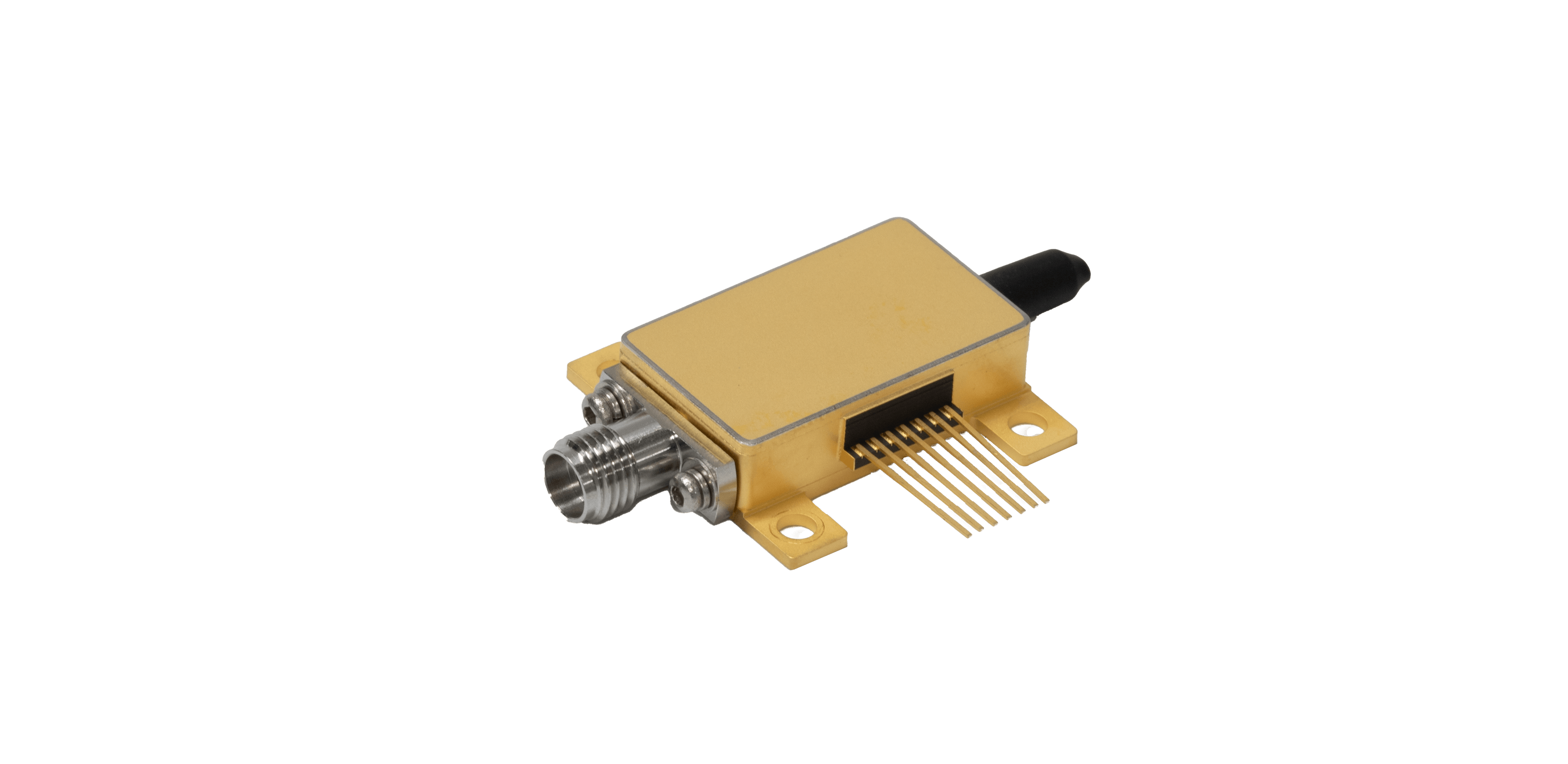
Engineers selecting an optical transmitter often face an early architectural decision: vary the laser output directly or keep the laser continuous and modulate the light in a separate device. They do not view this as a contest with one universal winner.
The appropriate method depends on reach, data rate, optical budget, power, cost, and production strategy. Direct modulation can reduce component count and simplify assembly, while external modulation can provide greater control over bandwidth, chirp, linearity, and specialized formats. These differences affect more than the transmitter.
They influence fiber dispersion tolerance, driver design, thermal management, receiver requirements, qualification effort, and the ability to extend the platform into a later network generation. Across current photonic applications, direct intensity modulation remains useful for short-reach and cost-sensitive links.
External modulation becomes appropriate when the system needs higher bandwidth, longer distance, improved waveform control, or coherent functionality. They therefore begin with the link requirement and then compare the two hardware paths.
Comparing the Two Signal-Generation Paths
With direct modulation, the electrical signal changes the operating current of the laser, causing optical output power to vary. The architecture can be compact and economical because the source and modulating function are combined.
They value this simplicity in applications where the resulting chirp, bandwidth, and extinction performance remain compatible with the fiber distance and receiver margin. Liobate describes the direct approach as suitable for shorter connections such as intra-data-center and access links. Within photonic applications, the lower component count may support cost and density goals.
The design team still needs to examine laser dynamics, temperature behavior, relative intensity noise, and dispersion penalty at the planned lane rate. Direct intensity modulation may become less appropriate as the required signaling speed or reach increases.
Changing laser current can alter both intensity and optical frequency, creating chirp that interacts with fiber dispersion. Equalization can recover part of the margin, but they calculate its power and complexity before assuming that digital processing will solve every physical limitation.
Matching Modulation Method to Reach and Capacity
External modulation separates the continuous-wave laser from the device that encodes data. This allows the modulator material and geometry to be optimized for electro-optic performance without changing the laser’s operating point.
The trade-off is added component cost, optical coupling, packaging, bias control, and another electrical interface that must be designed and tested. Liobate presents TFLN modulators for higher-bandwidth data-center, telecom, and coherent links. These photonic applications can benefit from controlled chirp, low insertion loss, and broad response.
External modulation also supports nested intensity and phase structures, giving engineers access to complex formats that cannot be produced by a simple directly modulated source. Direct intensity modulation can still win when the route is short, traffic density is high, and the cost or power of an external modulator is not justified.
They compare both options at the same reach and error target, using realistic laser, driver, modulator, and receiver assumptions rather than evaluating one architecture with less demanding laboratory conditions.
Making the Choice Through System-Level Evaluation
Their system model includes electrical energy, laser power, insertion loss, extinction ratio, dispersion penalty, equalization, thermal load, and assembly yield. External modulation may require a stronger laser because of optical loss, while direct modulation may require more receiver processing.
The better architecture is the one that meets the required margin with the lowest sustainable product complexity. Direct intensity modulation should also be qualified across temperature and aging because laser characteristics can shift with operating conditions. Photonic applications based on external devices need their own tests for bias drift, coupling stability, package bandwidth, and return loss.
Equal rigor is important; different architectures simply move risk into different parts of the transmitter. Liobate can be considered when a TFLN external modulator fits the bandwidth and loss requirements.
They would verify packaged performance with the intended driver and continuous-wave laser, then compare that result with a directly modulated reference design. This side-by-side process makes the business case visible to both engineering and sourcing teams.
Roadmap flexibility may influence the final choice. An external-modulator platform can sometimes support later data rates by changing drivers or optical components, whereas an integrated laser solution may require a new source.
Conversely, direct modulation may shorten development for a focused short-reach product. They assign value to flexibility when the program is likely to use it. No architecture should be selected from a single data-sheet number.
They review manufacturing capacity, package availability, test time, calibration, field diagnostics, and supplier support alongside technical performance. These factors determine whether a design that works in engineering can be delivered consistently and serviced economically.
The supplier provides one path for teams that need the control offered by external TFLN modulation. Direct and external methods both remain relevant, and their choice should reflect the actual link rather than a technology preference. A balanced comparison protects schedule, cost, and performance while leaving room for future capacity growth.
The modulation path should be selected from reach, power, cost, and service requirements rather than from a general preference for one architecture. Teams may use Liobate devices in comparative prototypes where external modulation is under review. Results should be judged at link level and documented for engineering and sourcing groups.