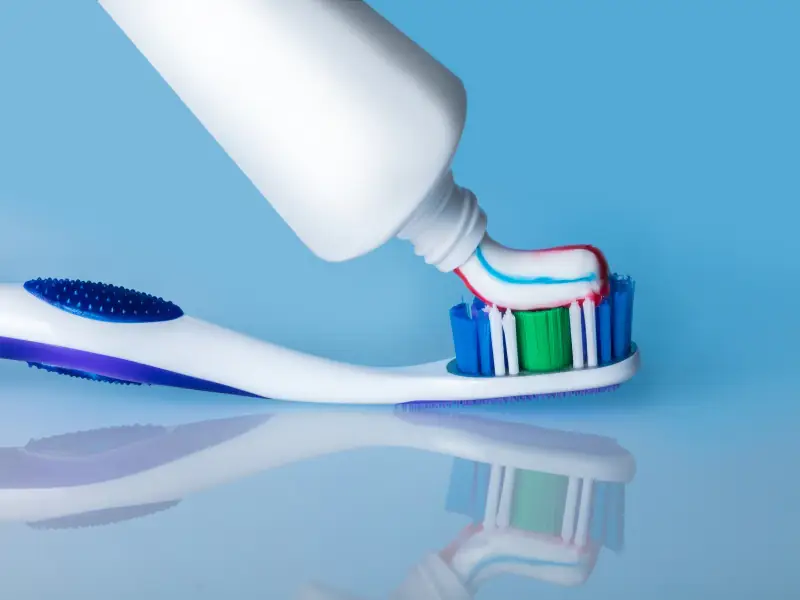
Toothpaste does more than freshen breath. Its formulation plays an important role in removing surface stains, maintaining tooth cleanliness, and supporting daily oral hygiene. Among its key ingredients, abrasive agents help clean the tooth surface by providing controlled mechanical action during brushing. For toothpaste manufacturers, selecting the right abrasive material is essential to balancing cleaning performance, enamel compatibility, formulation stability, and consumer expectations.
Abrasive toothpaste typically contains finely engineered particles that help remove food residues, plaque deposits, and extrinsic stains caused by coffee, tea, and other colored substances. When a toothbrush moves across the teeth, these particles contribute to the mechanical removal of unwanted deposits. However, effective cleaning depends not simply on how abrasive a material is, but on its particle characteristics, hardness, morphology, and interaction with other formulation ingredients.
The Role of Abrasive Particles in Toothpaste Formulation
Abrasive ingredients are carefully selected to deliver sufficient cleaning action without causing unnecessary wear to dental surfaces. Their performance depends on several physical properties, including particle size distribution, particle shape, surface structure, and dispersion behavior.
Particle size influences the contact between abrasive materials and tooth surfaces. Particle morphology can affect how particles interact with stains, while hardness influences their mechanical behavior during brushing. A well designed abrasive system must consider these factors together rather than relying on a single specification.
For manufacturers, consistency between production batches is equally important. Variations in particle characteristics can affect cleaning performance, texture, viscosity, and the overall sensory experience of toothpaste. Reliable raw material quality therefore supports both formulation development and long term product consistency.
Hydrated Silica and Teeth Whitening Performance
Hydrated silica is widely used in toothpaste formulations because its physical properties can be adjusted to meet different cleaning requirements. In hydrated silica teeth whitening applications, the material primarily supports the mechanical removal of extrinsic stains, helping teeth recover a cleaner and brighter appearance.
It is important to distinguish surface stain removal from chemical bleaching. Abrasive ingredients help remove stains deposited on the outside of teeth, whereas peroxide based whitening systems can chemically alter certain discolorations. Hydrated silica does not inherently bleach the internal structure of teeth. Instead, its value lies in providing controlled cleaning action within a carefully designed toothpaste formulation.
Different hydrated silica grades can offer different combinations of cleaning efficiency, texture, thickening performance, and compatibility with other ingredients. Manufacturers should therefore evaluate the specific grade against the intended product positioning, whether the goal is everyday cleaning, stain removal, or a whitening focused oral care product.
Balancing Cleaning Efficiency and Enamel Compatibility
One of the most important formulation challenges is achieving effective stain removal without excessive abrasion. Too little cleaning action may leave consumers dissatisfied with the product’s performance, while an unsuitable abrasive system may increase the risk of unnecessary wear to enamel or exposed dentin under certain conditions.
Dental abrasivity is commonly evaluated using Relative Dentin Abrasivity (RDA), a standardized measurement used to assess toothpaste abrasivity. RDA results should be interpreted alongside other performance data and relevant testing requirements. They should not be treated as a direct measurement of enamel wear or as the sole indicator of overall product safety.
Hydrated silica selection should account for the intended brushing frequency, target consumer group, complete formulation, and supporting test results. Manufacturers can then establish a more appropriate balance between cleaning performance and oral care considerations.
Why Raw Material Quality Matters to Manufacturers
Choosing a suitable abrasive material requires more than confirming its chemical composition. Particle consistency, dispersion, formulation compatibility, and processing behavior can all influence the finished toothpaste.
Manufacturers should assess how a silica grade performs in the complete formulation, including its interaction with surfactants, humectants, binders, and other active ingredients. Stability testing, sensory evaluation, cleaning performance assessments, and abrasivity testing can help determine whether the material meets the product’s technical requirements.
A dependable raw material supplier can also support formulation development by providing relevant technical specifications and product information. This helps development teams compare grades more efficiently, improve production consistency, and make informed decisions during product optimization.
JSJ Silica’s Approach to Oral Care Applications
JSJ Silica provides silica materials for industrial applications, including grades that can be evaluated for specific formulation requirements. Its ORASIL 107T product offers manufacturers a reference point for exploring the company’s silica portfolio and assessing product suitability for their technical needs.
When considering silica for abrasive toothpaste or hydrated silica teeth whitening formulations, manufacturers should review the product’s available specifications and confirm its suitability for oral care use with JSJ Silica. Relevant factors include particle characteristics, cleaning performance, formulation compatibility, quality consistency, and applicable regulatory documentation.
Working from clearly defined technical requirements allows manufacturers to evaluate raw materials based on measurable performance rather than general claims.
Developing More Effective Toothpaste Formulations
The cleaning mechanics behind abrasive toothpaste depend on the interaction between abrasive particles, tooth surfaces, brushing action, and the complete formulation. Hydrated silica offers flexibility for developing products that target surface stain removal and everyday cleaning, provided that the selected grade meets the necessary performance and safety requirements.
For toothpaste manufacturers, a systematic approach to raw material evaluation helps align cleaning efficiency, consumer experience, and production consistency. By combining appropriate silica selection with comprehensive formulation testing, companies can develop oral care products that deliver reliable performance while addressing the practical demands of modern toothpaste manufacturing.