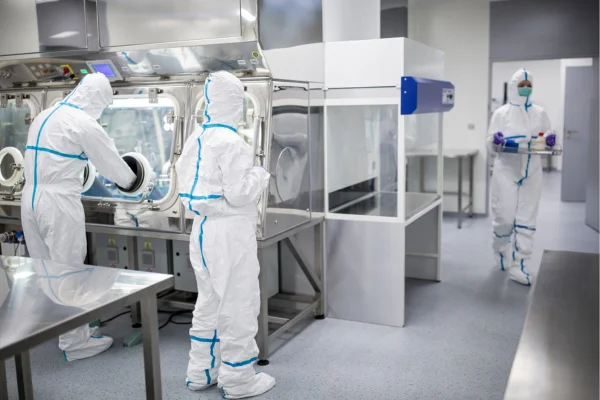
Modern biopharmaceutical translation requires delicate navigation between rapid volume expansion and rigid regulatory compliance. Scaling up active biological substances from benchtop volumes to industrial bioreactors demands strict adherence to international quality standards without sacrificing structural yield or purity. Investigators must orchestrate complex operational parameters, environmental controls, and sophisticated fill-and-finish lines to transform raw experimental vectors into viable clinical supplies.
Navigating this intricate scaling journey relies heavily on executing a precise GMP manufacturing process that satisfies the rigorous mandates established by global health authorities. Specialized contract organizations like Yaohai Bio-Pharma provide integrated biomanufacturing solutions, illustrating how technical infrastructure supports advanced biological modalities through scalable bioreactor capacities ranging from fifty to two thousand liters.
Designing Biomanufacturing Facilities For Regulatory Alignment
Facility architecture serves as the physical backbone for any compliant biopharmaceutical production operation, dictating air handling purity, material flow patterns, and personnel zoning. Cleanroom classifications must align strictly with international regulatory bodies such as the National Medical Products Administration, the Food and Drug Administration, and the European Medicines Agency to prevent cross-contamination risks. Engineering teams implement positive pressure differentials across sensitive processing suites to protect aseptic operations continuously throughout cultivation cycles.
Environmental monitoring systems track viable and non-viable particulate counts in real time, providing immediate feedback on cleanroom integrity. Equipment qualification protocols verify that every bioreactor, chromatography skid, and filtration assembly operates within validated physical tolerances before batch execution. Building versatile infrastructure allows facilities to switch seamlessly between clinical trial material production and large-scale commercial supply. Such structural preparedness underpins the execution of a reliable GMP manufacturing process across diverse therapeutic projects.
Upstream Scaling Dynamics And Bioreactor Optimization
Transitioning microbial expression systems from laboratory bench scales to industrial bioreactors involves careful management of mass transfer rates, mixing dynamics, and thermal profiles. Escherichia coli and yeast expression platforms require precise control over dissolved oxygen tension and nutrient feeding strategies to support high-density cellular growth without triggering metabolic stress. Scalable bioreactor volumes ranging from fifty to two thousand liters accommodate diverse clinical phases effectively.
Optimizing upstream parameters prevents inclusion body accumulation and maximizes the recovery of soluble target molecules from bacterial periplasmic spaces. Engineering controls must regulate pH shifts and shear forces continuously to preserve the structural integrity of sensitive genetic constructs and recombinant proteins. Furthermore, Yaohai Bio-Pharma utilizes extensive technical experience to scale microbial fermentation parameters safely without compromising product quality or volumetric yield.
Formulation Process Transfer – Maintaining Stability Across Production Scales
When scaling biologic therapeutics from laboratory to commercial production, formulation strategies must address the physical stresses introduced by larger-scale manufacturing equipment. Pumping, mixing, filtration, and filling operations at industrial volumes expose drug substances to shear forces, air-liquid interfaces, and extended processing times that are absent during bench-scale development. A compliant scale-up approach requires re-evaluation of excipient performance under these intensified conditions, ensuring that stabilizers such as surfactants and cryoprotectants remain effective at larger batch sizes.
The transition to commercial-scale formulation also demands comprehensive comparability studies that confirm product quality attributes remain consistent across scales. Analytical data from pilot batches and full-scale production runs must demonstrate equivalent aggregation profiles, charge variant distribution, and biological activity. Process parameters—including mixing speed, hold times, and filtration pressures—must be validated within defined ranges to ensure that the formulation process itself does not introduce variability.
Advanced Aseptic Fill And Finish Technologies
Final fill-and-finish operations represent the last physical step before biological products are sealed into container closure systems for clinical distribution. Modern aseptic processing lines utilize advanced barrier technologies, such as restricted access barrier systems and isolators, to minimize human intervention and reduce contamination risks. Automated fluid pathways and precise volumetric dispensing mechanisms protect sterile drug products during container filling.
Versatile fill-and-finish suites accommodate multiple container formats, including glass vials, pre-filled syringes, and specialized cartridges, depending on clinical delivery requirements. Environmental monitoring within filling zones remains rigorous, featuring continuous particle counting and microbial air sampling. Integrating automated capping and visual inspection technologies guarantees that every sealed unit meets strict cosmetic and sterility specifications.
Ensuring Comprehensive Analytical Validation And Quality Control
Verifying product safety and potency requires robust analytical testing protocols designed to detect subtle chemical modifications or physical impurities. High-performance liquid chromatography, mass spectrometry, and capillary electrophoresis provide quantitative metrics regarding residual host impurities, aggregation states, and structural variants. Method validation confirms the accuracy, precision, and linearity of analytical assays prior to clinical trial material release.
Comprehensive characterization studies evaluate degradation pathways under various environmental stress conditions, including thermal exposure and photolytic stress. Reference standard characterization establishes a benchmark for routine lot-release testing throughout the product lifecycle. Collaborative analytical teams work diligently to resolve unexpected assay discrepancies swiftly, providing greater confidence in therapeutic safety profiles.
Navigating Global Regulatory Filings And Lifecycle Support
Biopharmaceutical development demands seamless transitions from early exploratory research through clinical trials and eventual commercial-scale distribution. Integrated planning bridges initial process optimization directly with regulatory dossier preparation for Investigational New Drug submissions. Regulatory agencies demand complete traceability regarding raw material sourcing, equipment qualification, and environmental monitoring protocols within manufacturing suites.
Standardized quality management systems encompass comprehensive risk assessments, deviation investigations, and proactive corrective action frameworks. Independent quality assurance oversight guarantees that technical documentation satisfies international compendia standards without exception. Establishing transparent audit histories significantly streamlines regulatory review processes and mitigates clinical hold risks for developing organizations.
Conclusion
The commercial transformation of biological breakthroughs unites advanced bioprocessing technologies with strict regulatory standards to deliver viable therapeutic products. Balancing upstream volumetric scalability with meticulous downstream purification and aseptic filling protects patient safety while meeting global clinical demands. Collaborative scientific partnerships rooted in robust technical infrastructure continue to shape the evolution of advanced biopharmaceutical manufacturing across the medical community.