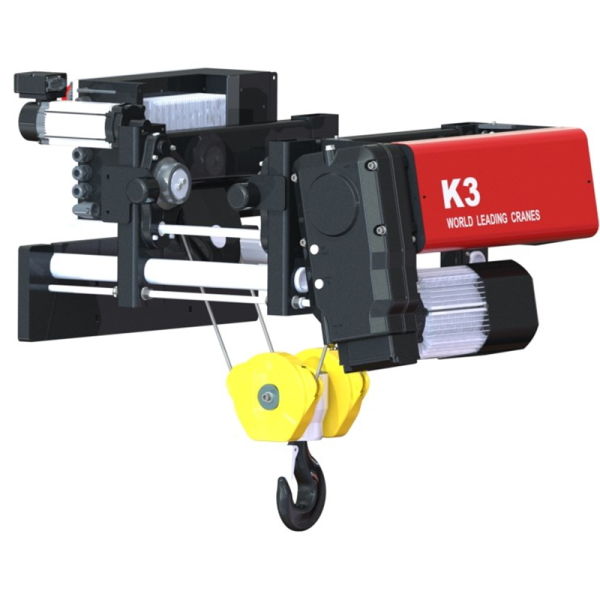
Two-hook lifting systems are used when a crane must handle large, long, or difficult-to-balance loads with greater control. Compared with a conventional single-hook configuration, a dual hook overhead crane can distribute lifting forces between two hoisting points, making it suitable for applications where load stability and coordinated movement are important.
However, the performance of a two-hook system depends on more than the lifting capacity of the hoists themselves. Manufacturers and crane integrators need to evaluate the complete combination of crane components, control systems, mechanical structures, and operating conditions before selecting a configuration.
Understand the Requirements of the Lifting Application
The first step is to define what the crane needs to accomplish. Load weight, dimensions, center of gravity, lifting frequency, travel distance, working environment, and required positioning accuracy all influence the appropriate system design.
A two-hook crane system may be useful when a load needs to be supported at two lifting points. However, the two hooks must work in a coordinated manner. If one hook moves faster than the other, the load can tilt, shift, or experience uneven loading.
Manufacturers should therefore evaluate whether the proposed system can maintain the required synchronization throughout lifting, lowering, and horizontal movement. The operating cycle also matters because frequent lifting can place greater demands on motors, brakes, gearboxes, ropes, drums, and other crane components.
Evaluate Mechanical Crane Components as a Complete System
Crane components should not be selected independently. Hoists, end carriages, gearmotors, lifting attachments, and structural elements must work together according to the crane’s rated capacity and operating requirements.
For example, gearmotors influence travel performance, acceleration, and positioning. End carriages transfer crane movement forces into the runway system, while lifting attachments provide the connection between the hoisting equipment and the load. A mismatch between these components can affect the overall operating performance of the crane.
WORLDHOISTS provides several categories of crane components, including crane kits and lifting attachments, gearmotors, and end carriages. When evaluating components, manufacturers should consider not only rated capacity but also compatibility, duty requirements, installation conditions, maintenance access, and expected service life.
Pay Close Attention to Hook Synchronization
Synchronization is one of the most important considerations in a tandem lifting application. When two hooks support the same load, their relative position can directly affect load stability.
A synchronized crane lifting configuration requires appropriate coordination between the two hoisting mechanisms. Depending on the application, the system may need to monitor hook position, lifting speed, and operating commands to reduce differences between the two lifting points.
This is particularly important for long loads or loads with an uneven center of gravity. Even a relatively small difference in hook movement can change the load angle during lifting.
Manufacturers should therefore ask how synchronization is achieved, how deviations are detected, and what happens if one hoist experiences a fault. These questions can help determine whether a proposed system is suitable for the intended lifting operation.
Consider the Control and Safety Architecture
Mechanical components are only one part of a modern crane system. Electrical and electronic systems also influence how accurately and safely a two-hook crane operates.
A two-hook configuration may require coordinated control of multiple hoists and travel mechanisms. The control architecture should allow operators to manage movement clearly while incorporating appropriate protection against abnormal operating conditions.
includes crane hoist control systems, intelligent safety systems, and intelligent features within its product portfolio. When selecting crane components, manufacturers should examine how the control system communicates with the mechanical equipment and whether the overall configuration supports the required operating logic.
Emergency stopping, overload protection, fault detection, and controlled movement should also be considered during system evaluation rather than added as an afterthought.
Check Load Distribution and Structural Compatibility
A two-hook system does not automatically divide the load equally between the two hooks. Actual load distribution depends on factors such as the center of gravity, hook spacing, lifting attachment arrangement, structural flexibility, and the way the load is connected.
For this reason, manufacturers should determine the expected loading condition before selecting the hoists and supporting components. The crane structure, runway, end carriages, hoists, ropes, hooks, and lifting attachments should all be evaluated against the anticipated forces.
A tandem lifting crane solution is most effective when the mechanical structure and control strategy are designed around the actual load characteristics rather than treating the second hook simply as an additional lifting point.
Plan for Maintenance and Long-Term Operation
Maintenance requirements are another important consideration when selecting crane components. Two hoisting mechanisms naturally introduce additional equipment that must be inspected, serviced, and monitored.
Manufacturers should consider access to motors, gearboxes, brakes, ropes, electrical components, and control equipment. Replacement parts and technical support can also influence the long-term practicality of a system.
A well-planned maintenance approach can help identify wear or abnormal operation before it develops into a larger equipment problem. Component compatibility is particularly important when replacement parts are required because inconsistent specifications can create unnecessary maintenance challenges.
Choosing Crane Components with the Application in Mind
Selecting crane components for a two-hook lifting system requires a system-level evaluation. Load characteristics, synchronization, mechanical compatibility, control architecture, safety functions, structural loading, and maintenance requirements should all be considered before a final configuration is selected.
For manufacturers evaluating a dual hook overhead crane or two hook crane system, the right question is not simply whether each component meets its individual specification. The more important question is whether all components can work together reliably under the actual operating conditions.
WORLDHOISTS offers a range of hoisting, lifting, mechanical, and electrical crane components that can be considered when developing or modernizing lifting equipment. By evaluating the complete system from the beginning, manufacturers can make more informed decisions and build a lifting configuration that better matches their operational requirements.