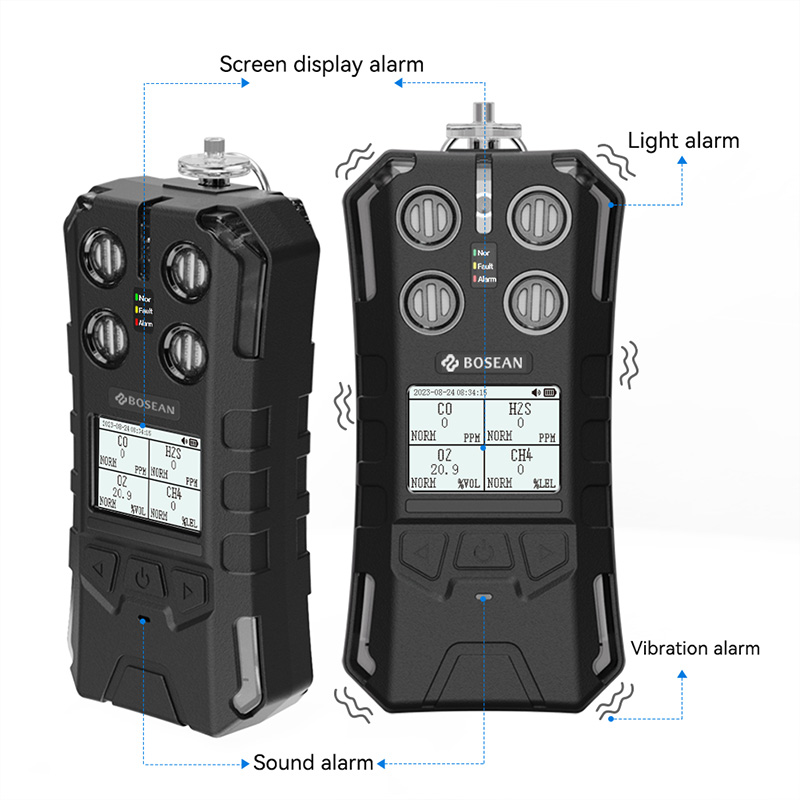
Gas distribution networks require regular monitoring to identify leaks, assess atmospheric conditions, and protect maintenance personnel. A portable gas meter helps technicians measure specific gas concentrations during pipeline inspections, repair work, and confined-space operations.
Depending on its sensor configuration, it can detect combustible gases, toxic gases, and oxygen levels. Understanding what these measurements indicate, how sampling methods work, and how to select suitable equipment helps operators establish more reliable inspection and maintenance procedures.
- Understanding Gas Measurements on Distribution Networks
A gas distribution network includes pipelines, regulators, valves, metering stations, and service connections. During routine inspections, technicians may encounter natural gas releases, oxygen-deficient environments, or hazardous gases associated with particular industrial processes. Monitoring these conditions helps identify potential risks before maintenance activities begin.
A portable gas detector is commonly used to assess atmospheric conditions around suspected leakage points and work areas. Depending on the installed sensors, measurements may include combustible gas concentration, oxygen percentage, and concentrations of selected toxic gases. These readings provide information about the atmosphere rather than directly measuring pipeline pressure, flow rate, or total gas consumption.
- Combustible Gas Concentration and Leak Identification
One important measurement is combustible gas concentration. Natural gas is primarily composed of methane, although its exact composition varies by source and supply. When released into the surrounding atmosphere, methane can create a fire or explosion hazard if its concentration reaches a flammable range and an ignition source is present.
Many instruments express combustible gas concentration as a percentage of the Lower Explosive Limit (LEL). This measurement indicates how close the detected concentration is to the lower boundary of the flammable range. It does not represent the percentage of methane in the air directly.
During pipeline inspections, technicians may use a portable gas meter to investigate joints, valves, regulators, and connection points. Correct probe positioning, sampling time, and instrument response characteristics are important for obtaining meaningful results. Operators should also understand that different gases require compatible sensors and calibration settings.
- Oxygen and Toxic Gas Monitoring
Oxygen measurement is another important part of distribution network safety. Oxygen deficiency can occur in poorly ventilated chambers, underground utility spaces, and other enclosed environments. Excessively high oxygen concentrations can also increase fire hazards. Monitoring oxygen levels before and during confined-space work helps personnel assess whether atmospheric conditions remain within established safety limits.
Some industrial gas systems may also involve toxic gases such as carbon monoxide and hydrogen sulfide. Their presence depends on the facility, process, and surrounding environment. A multi-gas instrument can monitor selected hazards simultaneously when the appropriate sensors are installed.
A portable gas detector should therefore be selected according to the actual risk assessment rather than the assumption that every distribution network requires the same combination of sensors.
- How Sampling Methods Affect Measurement Results
Gas detection accuracy depends not only on sensor performance but also on how the sample reaches the sensing element. Natural diffusion allows surrounding gas to enter the instrument through its sampling openings. This approach is suitable for monitoring the atmosphere around the detector, provided that the instrument is positioned appropriately.
Pump-assisted sampling draws gas through a probe and sampling tube. It can help technicians investigate locations that are difficult to access directly, including certain inspection openings and enclosed spaces. However, tubing length, blockages, moisture, and sample transport time can influence results.
A portable gas meter equipped with both diffusion and pump-suction sampling offers flexibility for different inspection tasks. Technicians must follow the manufacturer’s instructions for sampling distance, flow checks, and stabilization time.
- Selecting a Multi-Gas Instrument for Field Operations
When evaluating detection equipment, distribution operators should consider sensor compatibility, measurement ranges, response time, alarm functions, power supply, environmental protection, and calibration requirements. The instrument should also be suitable for the operating conditions encountered during pipeline maintenance and inspection.
The Bosean S40 4 in 1 Multi Gas Detector is designed for industrial safety monitoring. It uses integrated circuit technology and digital-analog hybrid communication technology, together with high-quality gas sensors. Depending on user requirements, it can detect combinations of one to four gases and integrate different sensing principles, including electrochemical technology.
Its sampling options include natural diffusion and built-in pump suction. The housing uses high-strength engineering plastic and composite anti-slip rubber, with waterproof, dustproof, and explosion-proof design characteristics specified in its product description. These features make the model relevant for evaluation across industrial applications, including petroleum, chemical, environmental protection, and refining operations.
For distribution network operators, a portable gas detector should also be supported by clear operating instructions, suitable calibration arrangements, and accessible technical services. These considerations are essential for maintaining dependable field measurements over the equipment’s service life.
- Calibration, Maintenance, and Measurement Reliability
Even a well-designed instrument requires regular maintenance. Calibration verifies measurement accuracy against an appropriate reference gas, while bump testing checks whether sensors respond to gas exposure and whether alarms operate as expected. A bump test does not replace calibration.
Technicians should inspect sensor condition, filters, sampling tubes, battery status, and alarm functions according to the maintenance schedule. Instruments exposed to excessive concentrations, moisture, mechanical damage, or unsuitable environmental conditions may require additional inspection before returning to service.
A qualified gas detector manufacturer should provide information about sensor limitations, compatible calibration gases, maintenance intervals, and technical support. Clear documentation helps purchasing teams compare equipment and establish consistent procedures across multiple field locations.
Building a More Reliable Gas Monitoring Strategy
Portable gas measurement supports distribution network safety by helping technicians identify combustible gas releases, assess oxygen levels, and monitor selected toxic gases. Reliable results depend on choosing suitable sensors, applying correct sampling methods, maintaining calibration, and interpreting readings within the context of the work environment.
Bosean develops and supplies gas detection and measurement instruments for industrial applications, alongside technical services for customers. Its S40 multi-gas detector offers configurable gas combinations and two sampling methods for different monitoring requirements. By evaluating equipment specifications and maintenance support carefully, operators can build a more practical and dependable gas monitoring program.