In modern dental laboratories, demand for consistent dimensional accuracy and stable throughput continues to shape equipment investment strategies. Procurement decision-makers and senior technicians frequently evaluate various additive manufacturing technologies to optimize their internal workflows. While stereolithography and LCD systems have distinct market positions, advanced digital laboratories often gravitate toward specialized digital light processing systems.
Understanding the engineering characteristics that separate industrial-grade equipment from standard desktop units is essential for labs aiming to meet strict clinical requirements without unexpected downtime.
Operating as a full-process digital dental manufacturing ecosystem service provider, Riton delivers integrated solutions that span advanced equipment design, digital platforms, and responsive local support. Drawing on nearly 30 years of laser expertise and early pioneering involvement in dental metal 3D printing research and development, they help laboratories modernize their production floors. Equipment selection should consider applicable technical requirements, material compatibility, and the regulatory requirements associated with the intended dental applications.
Evaluating Optical Precision and Wavelength Consistency
A frequent technical question raised by experienced laboratory supervisors is: How do projection stability and light uniformity across the build platform influence the dimensional accuracy of complex crown and bridge models?
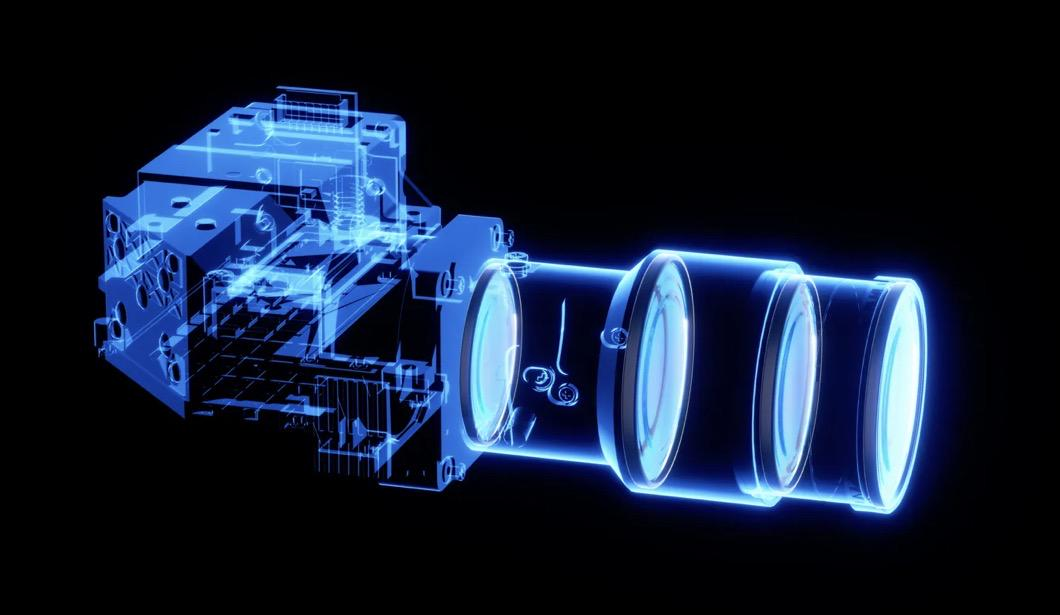
In a professional resin 3D printer dental workflow, light distribution directly dictates curing depth and edge crispness. Industrial systems utilize dedicated optical modules designed to minimize light intensity deviation. For instance, equipment operating with an optimized 385 nm wavelength light source can provide consistent curing performance when paired with photopolymer formulations designed for that wavelength.
When a light-calibration module achieves high uniformity and maintains minimal deviation across the entire projection area, technicians can produce intricate margins and delicate anatomical features without encountering localized under-curing or optical distortion.
Furthermore, for compatible LCD and DLP 3D printers operating at a wavelength matched to the resin’s photoinitiator system, resolution specifications greatly affect printing outcomes.The RXDent-D130 uses a 1920 × 1080 projection resolution. Its stated XY accuracy should be verified against the applicable product version, while supported applications depend on the resin used. This level of precision helps physical models align closely with digital design data, minimizing manual post-processing work and supporting smoother fitting during clinical application.
Intelligent Automation and Mechanical Stability in Daily Operations
Beyond optical output, professional manufacturing equipment must handle demanding multi-shift workloads reliably. Technicians often ask: What mechanical and automated features help manage printing conditions when processing high-viscosity dental resins?
To maintain structural integrity under heavy loads, advanced machinery incorporates robust mechanical assemblies. The P-class ball screw and closed-loop motor support stable vertical movement, with a stated precision of 0.01 mm after 10,000 reciprocating cycles under a 60 kg load. Actual print results also depend on setup and operating conditions.
Operational efficiency also benefits significantly from intelligent automation features. Modern production environments require minimal manual intervention to maintain steady output. Built-in auto-resin refilling systems with real-time liquid level monitoring reduce the risk of material depletion during unattended overnight prints. Additionally, high-sensitivity force monitoring tracks peeling forces dynamically and checks release film health, issuing instant alerts to prevent equipment damage and minimize scrap rates.
Real-World Application Scenario and Material Versatility
Consider a busy dental laboratory managing diverse clinical demands, ranging from multi-unit provisional crowns to high-precision orthodontic models. In a real-world production scenario, technicians frequently need to switch between different polymer viscosities within the same working day.
Utilizing the best DLP 3D printer technology, such as the RXDent-D130 model, allows labs to streamline these transitions through practical hardware design. This specific device features a dual-tray quick-switch mechanism that enables operators to alternate effortlessly between a large vat measuring 130 × 70 × 120 mm and a small vat measuring 60 × 60 × 120 mm. Spring-assisted platform calibration and secure dual-side sliders reduce setup time, cutting material waste and lowering overall operational costs.
Moreover, managing resin temperature is critical when processing specialized, viscous materials. Advanced systems incorporate dual environmental heaters and humidity monitoring to establish optimal thermal conditions quickly. Achieving a stable operating temperature of up to 45°C in just five minutes enables reliable printing regardless of external ambient temperature fluctuations in the laboratory. With rapid printing speeds of 1 to 6 seconds per layer and flexible layer thickness settings ranging from 0.01 to 0.2 mm, facilities can balance high-speed throughput with exceptional surface finish quality.
Ecosystem Integration and Comprehensive Support
Investing in digital manufacturing machinery involves more than evaluating isolated hardware specifications. Long-term laboratory success relies on comprehensive support structures, including specialized dental technical support and responsive after-sales service. When labs partner with global agent-backed local service networks, they gain immediate access to expert troubleshooting and preventive maintenance guidance. This robust support ecosystem, combined with field-proven stable performance and competitive lead times, empowers dental facilities to elevate their production capabilities and deliver consistent, high-quality results to clinical partners.